Hard to list specific tracks, as evaluation was done with myriad albums over an extended period of time, in order to avoid any ‘change is better’ misconceptions. But if you insist, then albums of note included ‘Home’ and ‘Ghosts’ by Hania Rani; ‘It Leads To This’ by The Pineapple Thief; ‘All This Will Be Yours’ by Bruce Soord; ‘Look Up’, ‘Hoops’ and ‘The Lines In The Trees’ by David O’Dowda; ‘The Raven That…’ by Steven Wilson. Also numerous tracks by Nat King Cole especially from the Billy May sessions. Personally, I see no reason to need a list of tracks from me, as you will know which of your albums will show up the strengths and weaknesses of your system as is. My comment is just my two pennerth, to be absorbed or dismissed as you see fit.
BTW, if you or anyone else reading the thread cares to share some music you enjoy and think might be interesting to listen to in this context, here’s a place for that:
Thanks…
This thread is “Subjective Impressions of Sound Quality-Audirvana Studio on Linux”… So… To make these subjective impressions contextually relevant to anybody trying to make such evaluations, (by virtue of this thread) reference tracks at the very least will provide common ground by which, any given subjective assertions in regard to playback sound-quality, on any flavor of Linux, by any given user subjective system amalgamation, here in the Community, can be best evaluated and understood in context. And If any consensus is reached, as to which flavor of Linux provides the best sound-quality, this assertion will have more credence.


Whether it was updating the archinstall script or I just got a little smarter about using it, it worked beautifully this time, and I have a minimal Arch Linux install (247 packages), no GUI. After just a bit of fiddling (had to add the config file as the package noted I might), Studio is up, running, and settings adjusted to my liking. Not able to listen on the main system tonight, but will check it out tomorrow.
So I have, and yep, I prefer the Arch Linux minimal install. Just for the sake of comparison, and not to say there is any particular effect in a modern computer due to this, my minimal install of Ubuntu Server 22.04 LTS has 522 packages installed versus the Arch Linux minimal install with 247 packages.
A quick and convenient music sample suggestion for those who have Qobuz is this past Friday’s release Butterfly Myth by Blunt Chunks (yep, really). On the opening track, Fill My Cup, there’s a tom that’s prominent in the mix. Though it’s not a percussion instrument that’s particularly high frequency, the transient response is good enough that the leading edges of the tom beats are real, physical things.
There are also vocals without reverb and vocals with reverb that are quite distinct, and even a bit of whistling. 
Edit: Addition - Also from this past Friday’s Qobuz releases, T-Bone Burnett’s Come Back, 2nd track on his album The Other Side, has very nicely recorded acoustic guitar and dobro.
A common lexicon of descriptive terms will help bring these subjective observations into a unambiguous common language describing subjective impression(s).
From the Stereophile article and glossary of terminology:
Sounds Like?
J. Gordon Holt | Jul 29, 1993
Subjective audio is the evaluation of reproduced sound quality by ear. It is based on the novel idea that, since audio equipment is made to be listened to, what it sounds like is more important than how it measures. This was a natural outgrowth of the 1950s high-fidelity “revolution,” which spawned the notion that a component, and an audio system as a whole, should reproduce what is fed into it, without adding anything to it or subtracting anything from it.
Traditional measurements of such things as harmonic distortion, frequency response, and power output can reveal many things a product is doing imperfectly, but there have never been any generally accepted guidelines for equating the measurements with the way they affect the reproduced sound. And there was strong evidence that many of the things people were hearing were not being measured at all.
Subjective reviewing simply skirts the question of how objective test results relate to what we hear, endeavoring to describe what the reproducing system sounds like.
But what should it sound like? The pat answer, of course, is that it should sound like “the real thing,” but it’s a bit more complicated than that. If the system itself is accurate, it will reproduce what is on the recording. And if the recording itself isn’t an accurate representation of the original sound, an accurate sound won’t sound realistic. But what does the recording sound like? That’s hard to tell, because you can’t judge the fidelity of a recording without playing it, and you can’t judge the fidelity of the reproducing system without listening to it—usually by playing a recording through it. Since each is used to judge the other, it is difficult to tell much about either, except whether their combination sounds “real.” But it can be done.
Even after more than 116 years of technological advancement (footnote 1), today’s almost-perfect sound reproduction still cannot duplicate the sound of “the real thing” well enough to fool someone who has learned to listen analytically—a trained listener. But the goal of literal realism, or “accuracy,” remains the standard against which a subjective reviewer evaluates any audio product design.
The casual audiophile hears reproduced sound as a whole, and judges its quality according to whether it sounds “good.” Many reviewers never reach that stage of perception because—convinced by their measurements that all competing products sound “essentially the same”—they never make the effort to listen critically to reproduced sound. The reason a subjective reviewer hears more than the “objective” reviewer is not that his auditory equipment is superior. It’s because he has accepted the premise that identical measurements do not necessarily ensure identical sound, and has trained himself to hear the differences when they exist.
The experienced listener does not just hear the totality of reproduced sound. He hears into it, observing how the component or system handles a variety of sonic attributes which make up the whole. Instead of simply “all the highs and all the lows,” he may hear a coloration that his experience has shown to indicate a treble peak. Or he may hear a lengthening of normally brief bass notes which he has learned to equate with a low-frequency resonance or a lack of woofer damping. Of course, both these problems would be revealed by measurements, but equating their measured severity with their adverse effects on the sound is another matter. To do that, we need words to attach to these effects. Those words are what we call subjective terminology.
https://www.stereophile.com/reference/50/index.html


My desktop PC OSs, all with Audirvana Studio installed. From left to right, Win 11; Xubuntu 22.04 LTS (version of Ubuntu with XFCE desktop); ArcoLinux (Arch-based, many desktop options - I have XFCE installed); Arch Linux minimal install (no desktop/GUI); Ubuntu Server 22.04 LTS minimal install (no desktop/GUI). I also have Studio installed on my MacBook Pro M1 Max laptop.
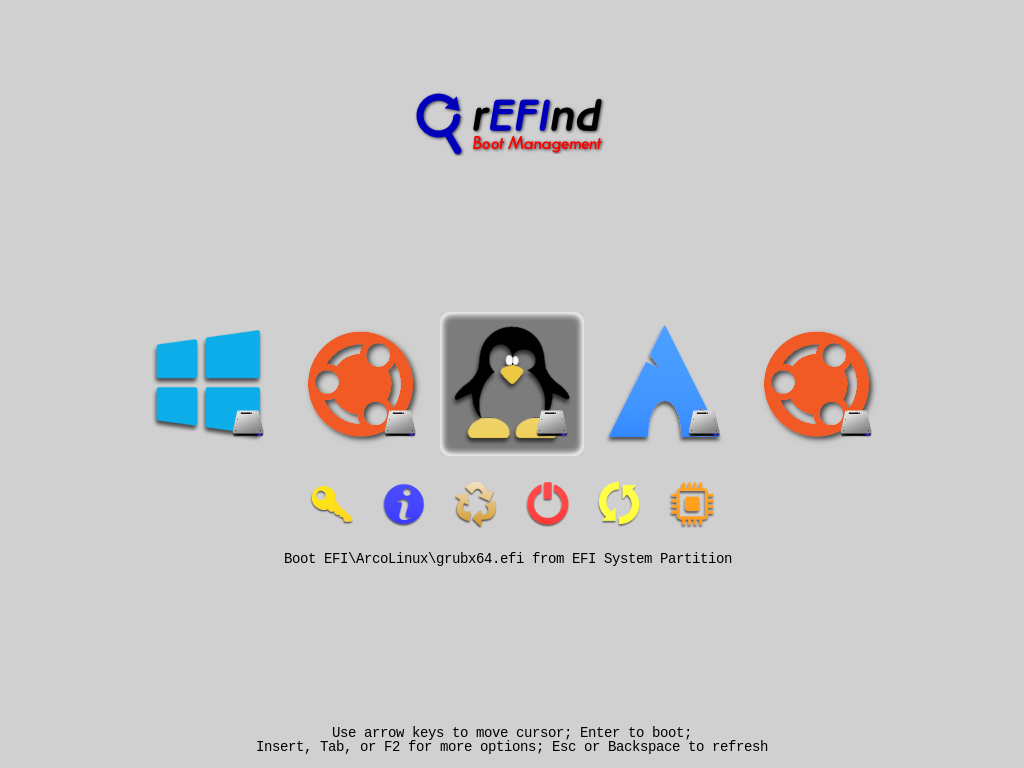
Which one do you like best, this far?
I’ve been using audirvana with a macbook for a few years and have been very satisfied with it. It sounds better in my tests than using an rpi endpoint with roon.
I wonder how much better can audirvana on the same rpi computer be compared to the macbook version. Considering all the hassle with linux, I think that’s a fair question.
Also, although linux is much lighter than MacOS and in principle a rpi4 (in used with batteries) is less noisy than a macbook, since audirvana does such a good job keeping things quiet with Mac OS, I wonder about those differences in practice.
I use a special toslink connection, which in and of itself eliminates a good deal of problems since there’s no electrical connection with the dac.
I’m very happy (delighted, really) with the sound playing from the minimal Arch install, and have been keeping pretty exclusively to that lately.
It happens that a couple of days ago after many years of hard use, when performing a backup one or both of my SSDs started showing signs of data corruption. So I got in two brand new ones and set them up yesterday. When I was done, as a reward for my work I sat down and listened to music for a couple of hours. The system remains as it has been since I first did the minimal install of Arch, as good as I have ever heard it.
That matches with my experience prior to installing an endpoint with optical Ethernet input (the endpoint has a minimal Linux installation and just runs a UPnP renderer). I think sticking with what you have is best for now unless you get some tremendous urge to learn about Linux.
Definitely no urge to learn about linux. And the little I had learned 10 years ago I’ve forgotten.
And I’ve never heard of optical ethernet… But if that’s what made the greatest difference, can’t something similar be used with a pc or a macbook?
Forgive me if I insist a little bit, but with a normal ethernet connection would it make sense in your view to move from where I am to a linux/audirvana (with minimal arch install etc). I think as most in this “silly hobby” I wouldn’t mind at all learning what to do if there’s a “proportional reward” at the end of the tunnel.
Regarding the optical ethernet, I’ve tried in my setup different ethernet cables, even borrowed the sotm top of the line for tests. With a regular spdif cable between either the pi2 and the dac, or the usb-spdif converter and the dac, there was a very clear difference: some ethernet cables and isolators act as effective filters for the ultra high frequency noise that they carry, resulting in a much cleaner presentation.
However, with toslink there was ZERO difference… (I do use a special toslink modified receiver and cable that sounds better than any other connection I have tried). Perhaps what you have experimented with the optical ethernet is analogous to what I have with optical spdif.
So if you tell me the optical ethernet was what did the trick, I’ll probably forget the linux route…
what is this optical ethernet connection anyway? have a link?
Do you have a Playback Designs DAC using PLINK? … If not, TOSLINK S/PDIF is limiting playback to 192k and DSD64 (2.8MHz) at best.
@Jud has made the community aware of this USB option:
I’ll get back to you later today on this with details.
Hi, looking forward to your comments
Hi, I must apologize - yesterday turned quite busy, and at least this morning and early afternoon will be too. But I have not forgotten, and I will get back to you, hopefully later today (I know I said that yesterday  ).
).
Ok. Just fired up full fat Linux Mint vs Mint XFCE. In my system context, I’ve gotta say that I prefer ffLM. Just seems to have better dynamic contrasts, both in macro and microdynamics, and a bigger soundstage. For example, Space Dog from Tori Amos’s Under The Pink, has a ride cymbal pattern on the intro. Using XFCE I can hear the cymbal and roughly where it should be on the soundstage; on the full fat version, I can hear the pitch of it’s wash and overtones clearly, accompanied by precise positioning within a 3D soundstage. Another example from the same album is The Waitress. In the quiet sections Tori is perfectly audible but, on XFCE, gets lost in the crescendo of the chorus. She’s right there, in her own space, on standard Linux Mint and, on the quiet intro, the spaces between effects and instruments are somehow ‘blacker’ (dunno if that’s a real word, but it is for today.)
OK, finally.
Here’s my setup:
From the computer, optical Ethernet output comes from this -
It runs from there through a couple of these switches -
Then it comes to my UPnP endpoint, a mini-PC with an optional SFP+ optical Ethernet input -
And from there via a USB optical cable to my DAC -
Why this stuff?
First, 10G optical Ethernet (that’s all the SFP+ stuff) not only has a specification requiring any device to produce low jitter itself, it also must reduce any incoming jitter in the signal to specified levels.
Second, since the connections to the endpoint and the DAC are optical, there is little chance of electrical ground/noise currents involving these components. The only place noise might come from is the power side, which is why I use two Teddy Pardo “mini-Teddy” linear power supplies, one for power injection to the optical USB cable (power must be injected near the DAC end of the cable to meet the 5 volt USB spec, since there is no electrical connection running through the cable), and one for the DAC.
I have two switches because one is in my office with the computer running Audirvana and one is in the living room where the system is located. It isn’t necessary for both switches to be capable of 10G optical, just the one where the system is located. The reason I have two is because when our house was built I had fiber optical Ethernet run through the walls, so any switch connecting to that must have optical Ethernet capability. But I would think any optical Ethernet connection to the endpoint (or streamer) would accomplish much the same thing.
I’m using Ethernet rather than Toslink because Ethernet has no bandwidth restrictions and I like to upsample to DSD512.
So that’s the story. It’s purely my subjective impression of what’s happening with my particular system, and certainly no one else needs to agree or run right out and buy any of this stuff. I just like the sound here.
Thank you, that’s interesting. Let do my research and I’ll get back to you