Look… I’ve stood inside of the Harman/JBL anechoic test facility with Floyd Toole and Sean Olive… I know what the reality is…


Look… I’ve stood inside of the Harman/JBL anechoic test facility with Floyd Toole and Sean Olive… I know what the reality is…
Showing my ignorance, I believe there are some DIY types out there that start with custom IEM ear impressions and use that as a basis of creating a test rig and using measuring microphones with measurement software to create personalized device correction for either headphones of IEMs… Some measurement microphones a are less then $150… I have two, a UMK-1 and a Dayton Audio UMM-6 that I use for room correction measurements… No reason they couldn’t be DYIed to measure a “cast” of an IEM impression…
BTY, I use a pair of Martin Logan ESLs as my main L & R so I am familiar with in room acoustics of dipole speakers… And yes, I create and use Room Correction DSP for them…
It’s not a simple process… to acquire a PIR for headphone playback… The other aspect is getting a high enough resolution signal… most test signals are limited to 44.1 or 48kHz.
I knew this… 
I knew this… And you don’t know the recording studios and post production facilities I’ve stood in… Let alone some SIGINT systems…
I think you mean all room issues… That is why I use physical room absorbers and then add the DSP…
BTY dipoles have little side wall interaction…
Are we now conflating a home playback scenario with a production facility…? There are a lot of design theories and requirements unrelated to a home playback environment… God knows there is no consensus on a studio reference outside of the mastering lab(s) and even these are not codified… The recorded sound we appreciate that is delivered by our systems really has no reference unless we are intimately involved and familiar with the master… If purity to the essence of the recording is the benchmark, then adding plug-ins that color the sound deviates from that premise. The Studio EQ in Audirvāna may be all that is needed in some situational conditions, especially if one knows how to use the tool effectively.
I am only suggesting that I am not a naive listener and have worked with some interesting folks in the industry…
I would suggest that you stop criticizing others for what you are guilty of yourself… You use plugins to cut the low end and most likely boost the high end because of your hearing loss, which many of us graybeards deal with… You also use a crosstalk plugin which the master was not designed for… And really, you are trying to tell me you don’t use some form of additional EQ to get things right in your kit…
 Wow… you are way off-base in how and why I apply Studio EQ… The Cross-feed Virtal LR allows for the reconstruction of the imbued mix elements of the production as presented by speakers, in the headphone audition… it’s termed Head Related Transfer Function (HRTF)… Are you telling me you don’t tweak your FIR?.. FYI, I don’t employ plug-ins at all, now that there is vertically integrated HRTF DSP and I never used EQ plug-ins with Audirvāna, until the vertically integrated Studio EQ arrived… I was looking into a physical mastering box, when the Studio EQ was implemented… I could have used my 2-channel DBX 586 tube pre/channel EQ, but wasn’t that compelled to get matched tubes and I didn’t want to add more interconnects… My DAC/HPA system has changed in the last few months.
Look… it was Margaret Wolfe Hungerford who said “Beauty is in the eye of the beholder.” It is my standard response at any art gallery or orchard and it’s fast becoming my standard response where the appreciation of sound is arisen**.**
Oh so you swapped out your plugins for the new native signal processing… It still is not what the masters intended… You are still tweaking your small signals just in a different signal chain…
Tweak my FIR filters how? Maybe you mean that I use a B & K house curve? Or maybe DRC first then additional Mastering Quality EQ… No my fren, EQ first then DRC… Hey Maxwell would be proud of your use of magnets to elevate your system to a higher level… Lol…
I used one HRTF plug-in, until the Crossfeed processing became available in v3 Beta…
Do tell… What did the ‘masters’ intend…? To have their product played back on a set of dipoles?
Behold…
Apparently you do not understand the permeability of ferrite materials and their application… 
You are tangled in your cognitive dissonance…
I hope you are not construing my statement as being arrogant… That statement was an affirmation of the reality of subjective assessment of playback quality in a real-world home playback environment, being relative to situational circumstances with or without intensive room-correction DSP application. Subjectively, we individually, are the arbiter of what sounds good in our interpretive environment and aesthetic appreciation of any given recording… The influences on the aesthetic interpretation are actually quite diverse and may or may not be quantifiable in a measurement… The reality is that we are generally chasing ghosts, and we can attempt to clean the window and improve the transparency of the playback with the tools available to us and our amalgamation of playback system components and tweaks. This is made more difficult when we fundamentally don’t have familiarity with the source master in the environment from which the encoding was made. For me personally, the closest to that reality is a native pure DSD256 recording and master… I may not be familiar with the production process and environment in which the recording was done… and this is the disconnect we all generally face… I know that Audirvāna is a tool that engineers (mix and master) and producers are using as their personal reference when all is done… Will we ever know the artistic intentions of the production as intimately as they..? I doubt this… My best option is to reveal to the best of my ability, the artistic energies of the performances and the production… I know what the reality of this sounds like… and it sounds like the natural world around me and in my experiential memories, if not intimately involved in the process.
Hi @Agoldnear
Not at all. Your posts are always helpful. My operating principle is that each of my recordings are to be taken as they are presented. Each one has its own personality, characteristics, and my job is to interpret each one as I find it. I only minimally alter the input with the EQ as my speakers are a tiny bit low on the bass end. The Glorious Magnepans, especially my 3.3Rs are renowned for this tiny lack. All the other changes and suggestions made by various people are interesting, but I can’t fiddle too much. Too much time NOT listening to the music.
I love fiddling to get the sound right, but I won’t spend more than 5 percent of my time altering speaker position or EQ adjustments. I truly find that I’d be doing it for every recording because they are ALL recorded in different places under different conditions with different equipment. Not to mention different instruments to produce the original sound.
Sometimes my comments are a bit of a sideswipe, hopefully more humorous than hubris. I’m naturally a bit snobby, I think, but I found I loved listening to Celine Dion when she sang at the Olympics. I thought it was a magnificent performance, beautifully produced. It moved me, and that was on the telly sound system. I’ve since found a 16/44 at Apple, I think, and it sounds even better on my home system.
So read my comments as they are written with a slight (some people say smug) smile at the corner of my face.
Regards
Phil
I agree with all of your sentiments regarding artistic and emotional interpretation of any given recording… Thank you for always tweaking the EQ of the conversation or debate… That Celine Dion performance was powerful and spine-tingling…
And correct me if I’m wrong, I sometimes am, not often, but… she ended that song on not a concluding note. I’m not sure of the technical term but usually a meledy concludes with a note that ‘completes’ the tune. I don’t know but I interpreted it as a return to performing and thus song is a pre-performance… more to come. She has been suffering from stiff-person-syndrome and the Olympics performance was the first in quite a while.
Just watched it on YouTube… It was complete and assertively and authoritatively delivered, leaving no doubt to the emotional visceral-ness she imbued in that moment.
Hello, I’m just wanted to see the new beta 3.0 and test. I’m on MacOS 15.7.2. Screen: 5k 27inch. Feedback. How to get 3.0.
What ever I do I only get Studio V2.99.15 And don’t see any changes in UI etc. How to download the correct one?
That is the new Beta - Starting with a per-number system so that when it’s “Ready” they can use “3.0x”. The Windows 11 Beta is also labeled as such 2.99.14. You have the new Beta 3 if you have V2.99.15 
an origin version will be also nice for further testing!
Operating System Type: macOS
Operating System Version: 26.2 Release
Screen Size: 4K Native
Feedback Type: Bugs - Suggestions - Appreciation
1rst bug i found is when you press audio scan, history, playqueue buttons at mini player is loses the user size every time without restoring it.
2nd bug i found is with artists and album scrolling, its choppy and laggy, not smooth and fluid.
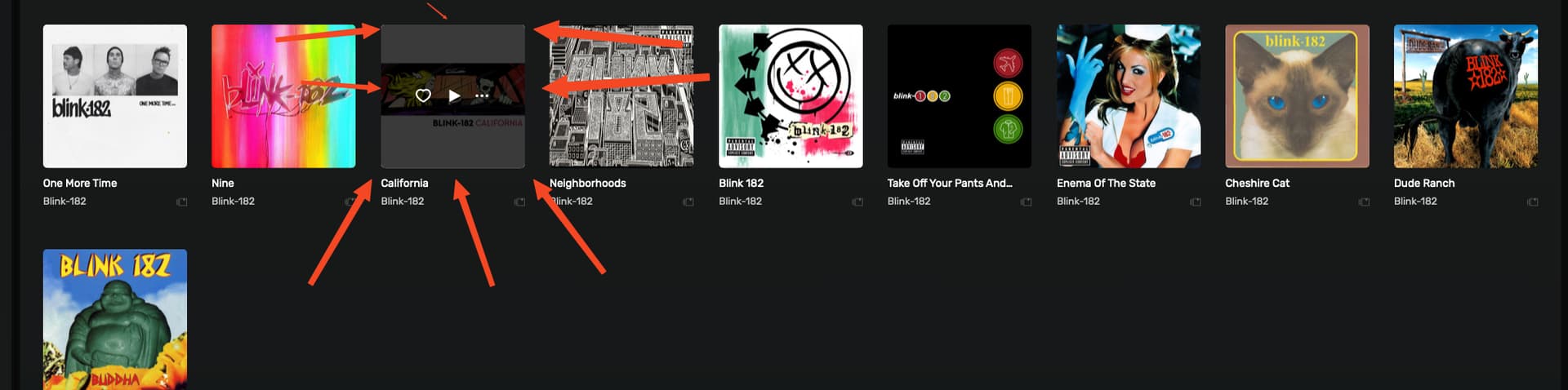
3rd bug is the hover with artists and albums, the border is not looking rights and missing as you can see at the screenshot
4th bug is when i click album cover at miniplayer goes to fullscreen, dont know if its intentional but happens alot and its kinda anoying.
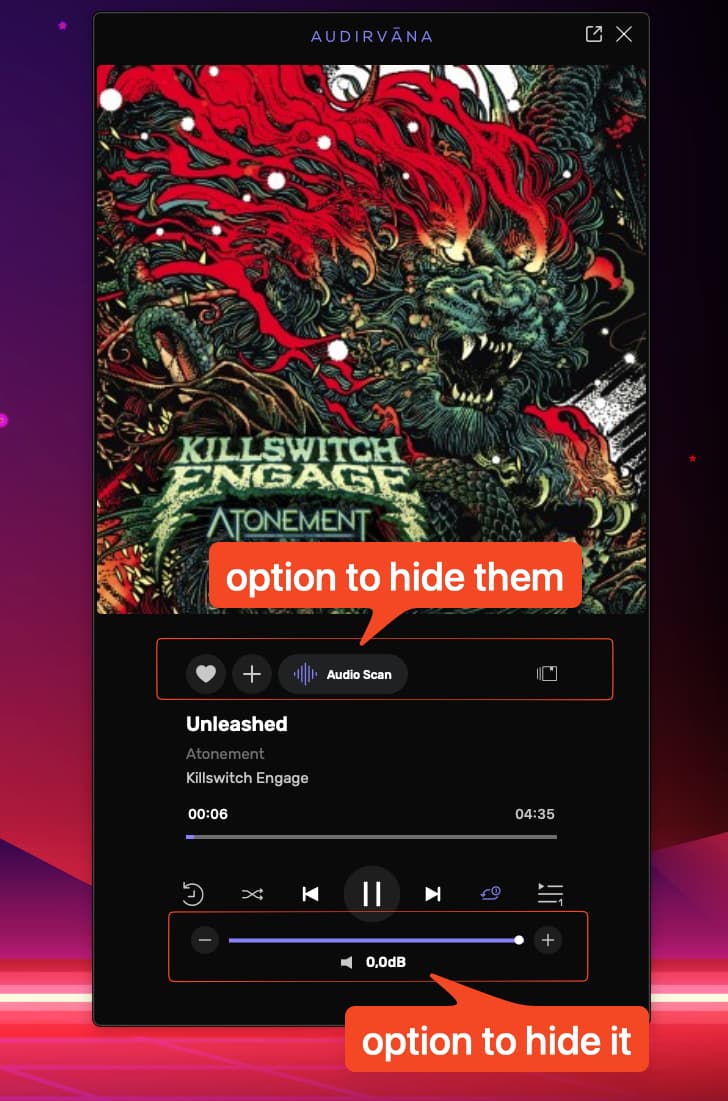
as for a suggestion…
an option to hide those for a minimalistic look will be awsome!
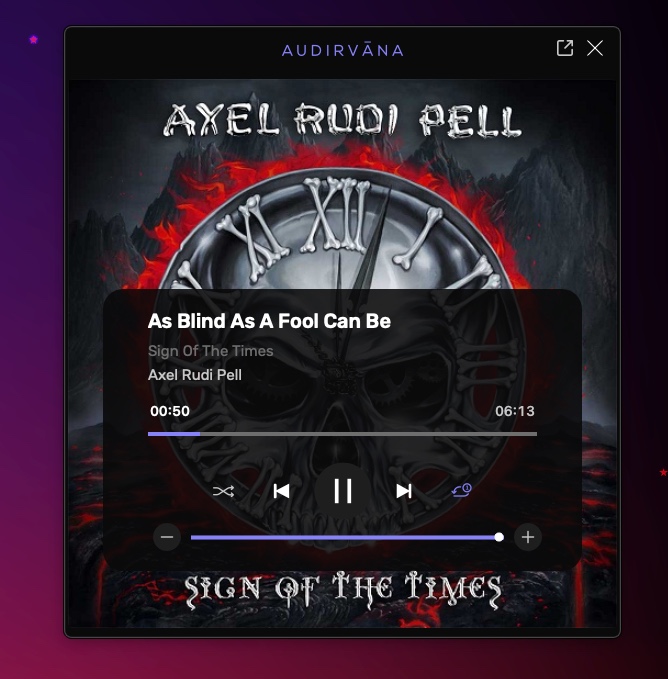
for example this miniplayer ui is what i call love at the first look!
besides that the app is more usable than ever! and i’m sure manny improvements will come and thats impressive!